

Everything About Hot-Dip Galvanizing Lines
Introduction
Hot-dip galvanizing is one of the most reliable methods for extending the service life of steel against corrosion. Despite its seemingly simple appearance, this process is the result of a delicate combination of chemistry, metallurgy, and industrial experience. During the years I have worked alongside galvanizing facilities, one point has always been clear: the final coating quality is the result of precision in the preparation stages, not merely the type of metal or the bath temperature.
Complete Stages of a Hot-Dip Galvanizing Line
1. Degreasing (Degreasing)
Objective: Complete removal of organic contaminants, oil, grease, and emulsions from the metal surface.
Alkaline Degreasing Solution Formula:
NaOH (3–8 wt%) + Na₂CO₃ + Surfactant
Main Chemical Reaction:
RCOOH + NaOH → RCOONa + H₂O
2. Pickling with Inhibitor and Fume Suppressant
Objective: Removal of oxide layers, rust, and iron oxides from the metal surface.
Standard solution: Hydrochloric acid (HCl) or sulfuric acid (H₂SO₄) at a concentration of 10–15%.
Reaction with Iron Oxide:
Fe₂O₃ + 6HCl → 2FeCl₃ + 3H₂O
Inhibitor
A corrosion inhibitor that prevents thinning and degradation of the base metal by adsorbing onto the metal surface.
Compounds: Amines, thioureas, and organic phosphates
Anti-Fume Additive
An additive used to reduce the release of corrosive acid vapors into the environment by forming a light foam layer over the bath.
Advantages:
- Protection of surrounding equipment
- Reduced corrosion of line components
- Protection of workers’ respiratory health
3. Rinsing and Fluxing
Objective: Removal of residual acid and preparation of the surface for zinc adhesion.
Flux Solution Formula:
ZnCl₂ + 2NH₄Cl → (NH₄)₂[ZnCl₄]
Note: A flux with a neutral pH (5.5–6.5) prevents the formation of undesirable zinc salts in the subsequent stage.
4. Immersion in the Molten Zinc Bath (Hot-Dip)
Bath temperature: 445–460°C
Layers Formed Between Steel and Zinc:
| Layer | Chemical Composition | Characteristic |
|---|---|---|
| Fe₃Zn₁₀ | — | Hard, thin |
| FeZn₇ | — | Thicker |
| FeZn₁₃ | — | More brittle |
| Zn | Pure | Bright, adherent |
Considerations:
- Addition of Al (0.005–0.02%) for a brighter surface
- Control of withdrawal speed from the bath to regulate coating thickness
5. Cooling and Passivation
Objective: Prevent the formation of white rust during storage and transportation.
Methods: Use of chromate-, phosphate-, or silane-based solutions with high moisture resistance.
Summary of Key Reactions
| Stage | Chemical Reaction |
|---|---|
| Pickling | Fe₂O₃ + 6 HCl → 2 FeCl₃ + 3 H₂O |
| Degreasing | RCOOH + NaOH → RCOONa + H₂O |
| Fluxing | ZnCl₂ + 2 NH₄Cl → (NH₄)₂[ZnCl₄] |
| Alloying | Fe + Zn → γ, δ, ζ, η layers |
| Oxidation | 2 Zn + O₂ → 2 ZnO |
| Patina | ZnO + CO₂ + H₂O → ZnCO₃·Zn(OH)₂ |
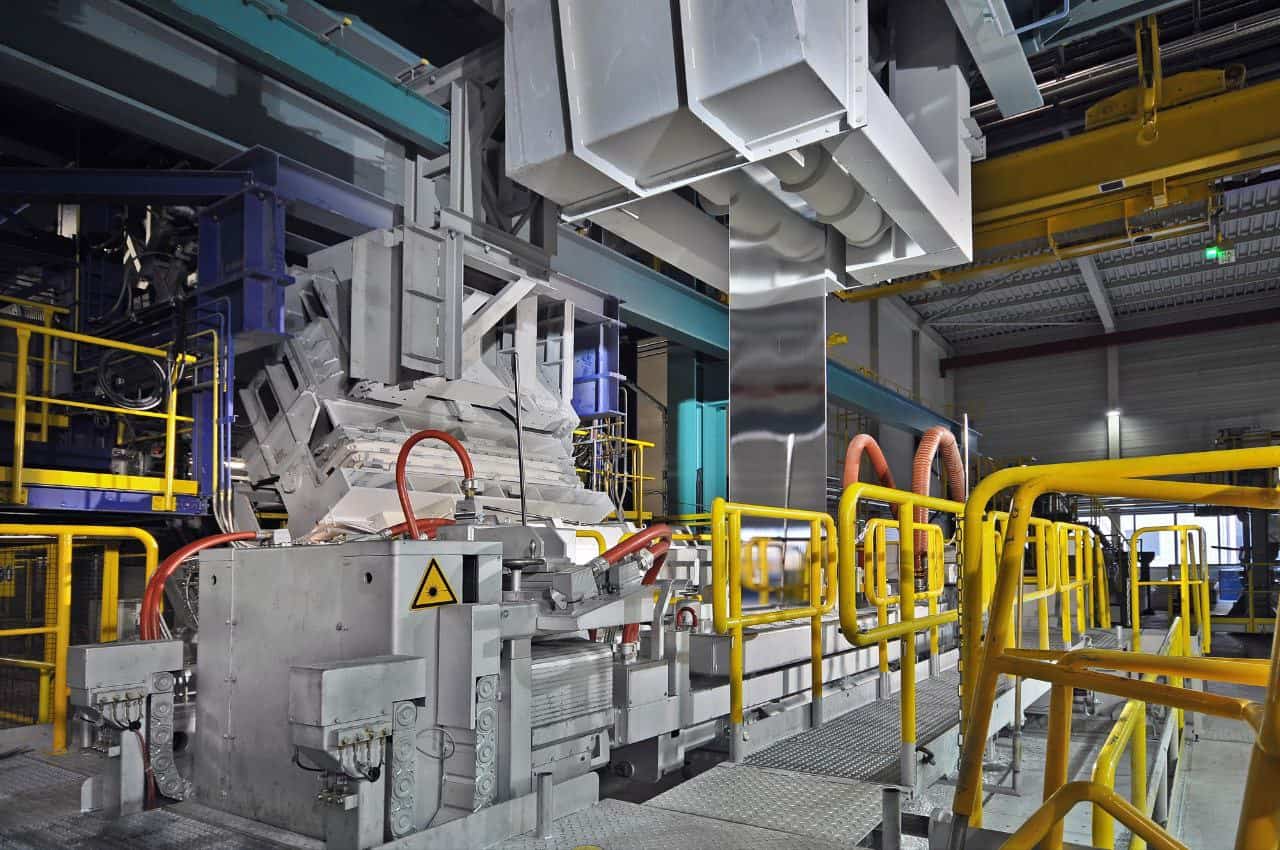
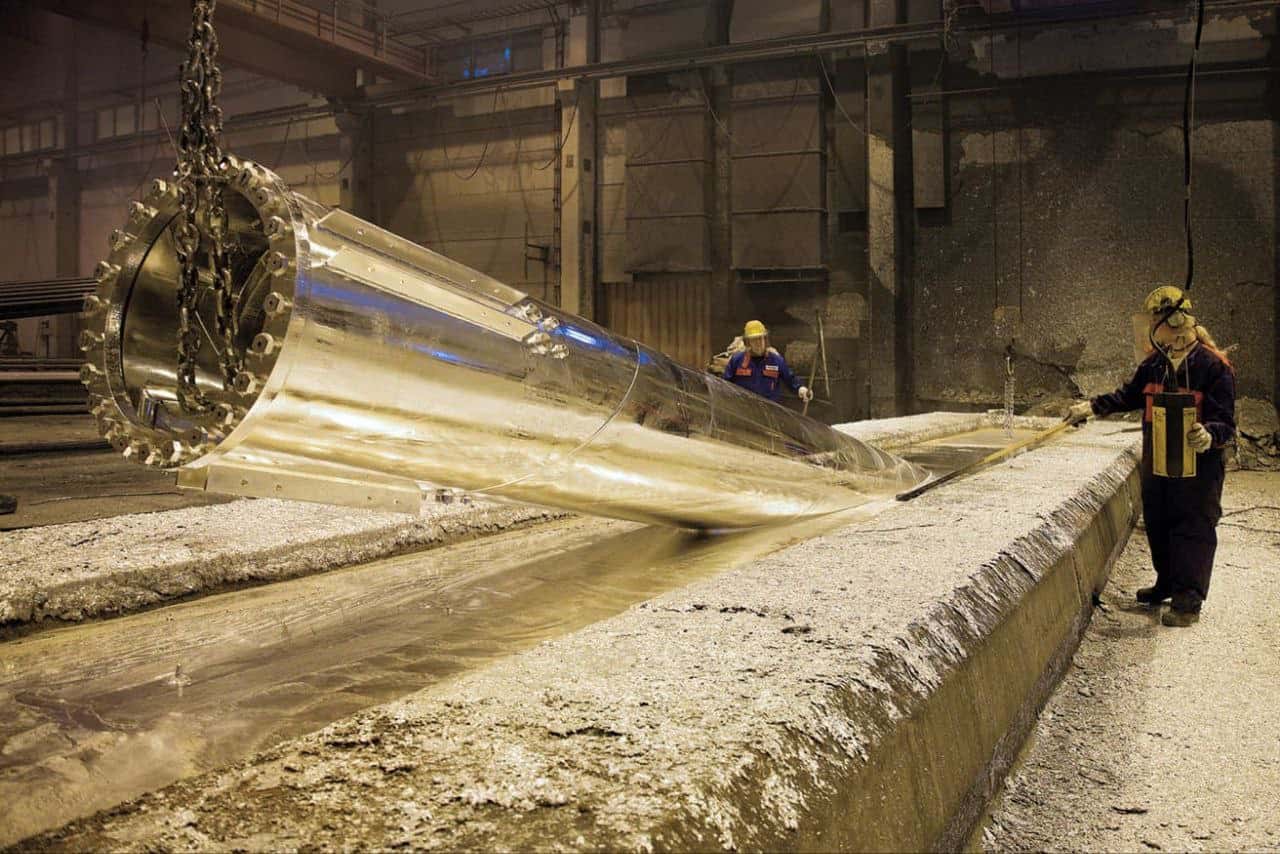
Hot-Dip Galvanizing Line
Technical Conclusion
A hot-dip galvanizing line is not simply a zinc bath; it is a combination of precise reactions, intelligent chemical choices, and continuous quality control. What ensures coating durability is not only the zinc itself, but also complete degreasing, the use of an appropriate corrosion inhibitor and fume suppressant, and maintaining the chemical conditions of the bath at all times.
At Farayand Yekta Pajouh, a knowledge-based company, we support galvanizing lines by providing various specialized inhibitors and fume suppressants, stable fluxes, and industrial degreasers, helping them achieve consistent, safe, and stable quality.
References:
- Galvanizers Association UK (2023), Technical Guidance Notes
- American Galvanizers Association (AGA), HDG Best Practices Manual
- DIN EN ISO 1461 – Hot-dip galvanized coatings on fabricated iron and steel articles
- ASTM A123/A123M – Standard Specification for Zinc Coatings
- Field experience in the petrochemical industries and northern Iran pipeline lines

No comment for this post.