

Benefits of Using Zinc Phosphate Coatings and Their Industrial Applications
Introduction
In the previous article, we discussed the comparison of dicationic and tricationic zinc phosphate coatings and examined these two types of phosphate coatings in terms of their chemical composition, properties and performance, practical considerations, and costs.
In this article, we discuss the benefits of using zinc phosphate coatings and then explore their industrial applications.
Benefits of Using Zinc Phosphate Coatings
The use of zinc phosphate coatings, particularly dicationic and tricationic types, offers numerous advantages in the coating process and the final performance of components. The most important benefits include:
- Significantly improved paint adhesion: The phosphate layer acts as an excellent primer, firmly bonding the paint or final coating to the metal surface. Zinc phosphate creates an active and rough surface that helps prevent the paint from separating even under mechanical stress. This is particularly important in powder coating and electrostatic coating processes, which require a surface with high charging capability and adhesion.
- Improved corrosion and rust resistance: Phosphating increases the metal’s inherent resistance to corrosion. The coating itself acts, to some extent, as a protective barrier, preventing direct contact between moisture and corrosive agents and the metal. More importantly, zinc phosphate beneath paint layers prevents the spread of corrosion when the paint is scratched or damaged, thereby helping to prevent underfilm rusting. Test results show that phosphated and painted components can withstand hundreds of hours in salt spray testing without rusting, whereas painted components without phosphating can corrode relatively quickly.
- Uniform coating and reduced paint defects: The presence of a phosphate layer promotes uniform paint thickness and quality. Phosphate crystals act as microscopic anchors, preventing paint runs and improving the surface’s wettability by the paint. As a result, cavities, edges, and difficult-to-reach areas are also properly coated, while defects such as blistering and peeling are reduced.
- Increased component durability and service life: The combination of improved adhesion and corrosion resistance significantly extends the service life of components.
The phosphate coating acts as a cushioning layer between the metal and the paint, distributing thermal and mechanical stresses and preventing coating detachment under harsh conditions. In manganese-containing types, the wear resistance of the underlying layer is also improved, increasing coating durability in applications where components are exposed to wear or impact. For example, in components exposed to friction, the phosphate coating can work in combination with oil to reduce friction and prevent premature wear.
- Reduced overall costs and improved efficiency: Although applying a phosphate coating adds an additional step to the production process, it can reduce overall costs by preventing premature component failure and reducing rework and warranty claims. Components that are properly phosphated and painted require less maintenance and have longer maintenance intervals. In addition, the presence of zinc phosphate can allow a reduction in the final paint thickness without compromising performance, which can lead to savings in paint consumption. From an operational perspective, many modern phosphating processes, particularly tricationic processes, can be carried out at room temperature, resulting in energy savings and simpler heating equipment. Furthermore, the lower sludge generation associated with these processes means less frequent line cleaning and lower chemical waste disposal costs.
In summary, phosphating metal components is an investment in quality that provides a strong foundation for paint, prevents rust, increases coating durability, and ultimately offers greater economic benefits over the product’s service life. For this reason, the process has become an industrial standard in many metal manufacturing applications.
Industrial Applications of Zinc Phosphate Coatings
Zinc phosphate coatings, particularly multi-cationic types, are used across a wide range of industries as an essential stage in surface preparation. The most important industries and applications include:
- Automotive Industry: The automotive industry is the largest consumer of zinc phosphate coatings. Vehicle bodies (Body in White) undergo phosphating after the washing stages, typically using a tricationic process, followed by electrodeposition (ED) and final painting. This phosphate layer provides a foundation for electrostatic paints and electrophoretic coatings, without which achieving high corrosion-resistance standards (such as 1,000 hours of salt spray exposure) would not be possible. In addition to vehicle bodies, many chassis, engine, and suspension components are also phosphated before final coating to ensure rust resistance throughout the vehicle’s service life.
- Aerospace Industry: In the aerospace industry and aircraft manufacturing, aluminum is the predominant metal and requires specialized preparation methods such as chromating and anodizing. However, steel aircraft components, such as parts of landing gear, steel fittings, and bolts, are often phosphated and then painted to prevent corrosion and improve paint adhesion. Zinc phosphate coatings on steel can also serve as an alternative to chromating on galvanized or plated steel surfaces in aerospace components, particularly because phosphating is less toxic than chromating and offers greater safety. In aerospace-related defense industries, such as missiles and satellite equipment, phosphating is considered wherever steel components require painting.
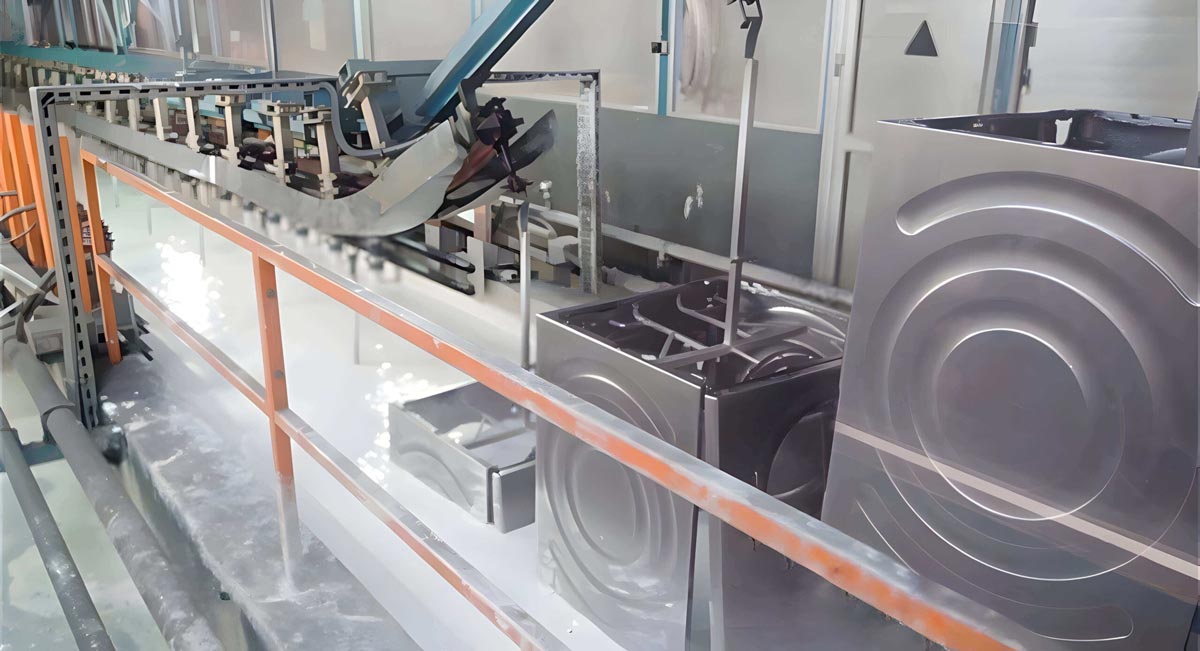
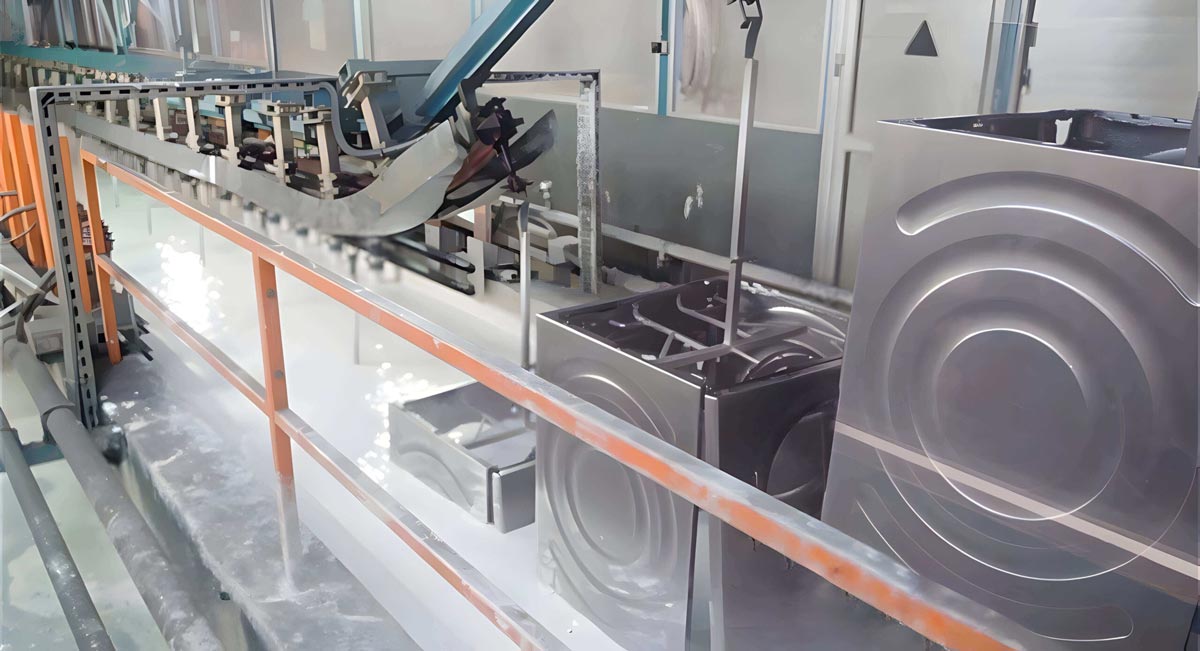
- Home Appliances and Household Metal Equipment: Many metal appliances, including refrigerators, washing machines, dishwashers, stoves, and air conditioners, have metal bodies, often made of steel, with powder or liquid paint as the final coating. To ensure paint durability in kitchen or humid environments, these components are generally phosphated before painting. Depending on product requirements, iron phosphating, which is less expensive and simpler, or zinc phosphating may be used. However, in higher-end products where greater corrosion resistance is required, such as washing machines with galvanized bodies, dicationic or tricationic zinc phosphating may be used. These coatings provide an excellent adhesion base for electrostatic powder coatings and prevent the body from rusting over years of use.
- Metalworking Industries and Industrial Equipment: In workshops and industries where manufactured metal components require subsequent painting or coating, zinc phosphating is a key stage. For example, manufacturers of metal profiles, pre-painted sheets, metal shelving, cabinets and electrical panels, machinery components, and other products use phosphating lines for surface preparation before painting.
Even in industries such as pipe and fitting manufacturing, where components are typically galvanized or plated, zinc phosphating is sometimes used as a base layer before the final coating to achieve improved corrosion-protection properties.
- Military and Defense Industries: Military equipment and hardware require exceptional corrosion resistance and durability because they are used under harsh environmental conditions, including moisture, mud, and marine climates. Phosphating of military components has been common for decades; the term Parkerizing is known as the trade name for zinc/manganese phosphating processes used on firearms. Many small arms, including rifles and pistols, and their components are coated with zinc/manganese phosphate to protect against rust while also providing lubricious surfaces that reduce wear on moving components.
- In military vehicles, tanks, and armored equipment, zinc phosphate coatings are also used before the application of specialized camouflage and chemically resistant paints. In general, wherever reliability under harsh conditions is required—from military engineering equipment to metal structures exposed to severe weather—zinc phosphate coatings are considered an important stage of the coating process.
In addition to the above, zinc phosphate coatings are also used in industries such as electrical and electronic component manufacturing (to prevent corrosion of connections or create conductive/non-conductive bases for coatings), the oil and gas industry (to protect steel equipment against rust before installation), and agricultural and construction machinery, which operate in corrosive environments involving mud and moisture.
The broad range of applications of zinc phosphate results from its compatibility with various painting methods (powder, liquid, and electrophoretic coating) and different metals (steel, iron, galvanized steel, aluminum, etc.). As a versatile base layer, this coating has become an integral part of many modern production lines and contributes to improving the quality of metal products across various industries.
In the next article, we have presented Key Solutions for Optimizing the Zinc Phosphating Process.
For more information about FYP Zinc Phosphate Products, you can visit the page.


No comment for this post.