

Comprehensive Guide to Dicationic and Tricationic Zinc Phosphating: Advanced Technology in Surface Preparation
Introduction
Zinc phosphate coatings are among the most widely used surface preparation technologies in the automotive, metalworking, home appliance, defense, and industrial machinery industries. By forming a porous layer on the metal surface, these coatings enhance the adhesion of paints and organic coatings, improve corrosion resistance, and enhance lubrication performance.
Zinc phosphate coatings are divided into two categories: Di-Cathionic Zinc Phosphate and Tri-Cathionic Zinc Phosphate, each with its own specific characteristics and advantages. In this article, we examine these two types of coatings in terms of their processes, advantages, performance, and applications.
What Is Zinc Phosphating?
A zinc phosphate coating is formed through a reaction between the metal surface and a solution containing zinc and phosphate ions. This reaction creates a thin, porous layer of zinc phosphate crystals on the surface, which plays a key role in improving the adhesion of subsequent coatings and protecting against corrosion.
Chemical Reaction for Zinc Phosphate Formation
3Zn(H₂PO₄)₂ + Fe → Fe₃(PO₄)₂ + 3ZnHPO₄ + 3H₂
In this reaction, zinc ions (Zn²⁺) and phosphate ions react with the metal surface, forming a nanoporous layer of zinc and iron phosphates that improves paint adhesion and reduces friction.
| Property | Di-Cathionic | Tri-Cathionic |
|---|---|---|
| Metal Components | Zn²⁺ + Ni²⁺ or Mn²⁺ | Zn²⁺ + Ni²⁺ + Mn²⁺ |
| Crystal Structure | Coarser and more porous | Finer and denser |
| Paint Adhesion | Good | Excellent |
| Corrosion Resistance | Moderate to high | Very high |
| Oil Absorption and Lubrication | Good | Excellent |
| Applications | Base layer for painting; coating of industrial components | Automotive industries; critical mechanical components |
Di-Cathionic Zinc Phosphate Coating
Di-cathionic phosphate coatings contain two types of metal cations, Zn²⁺ and Ni²⁺ or Mn²⁺, which improve paint adhesion and enhance corrosion resistance.
Advantages:
- Forms a uniform and porous coating
- Provides suitable adhesion for paint and organic coatings
- Reduces the risk of rust formation in industrial environments
- Provides good oil absorption for improved lubrication
Applications:
- Automotive industry – Surface preparation of vehicle bodies before painting
- Metalworking – Coating of industrial components prior to enameling
- Home appliance industry – Protection of metal surfaces against corrosion
Tri-Cathionic Zinc Phosphate Coating
In tri-cathionic zinc phosphate coatings, in addition to zinc (Zn²⁺), nickel (Ni²⁺) and manganese (Mn²⁺) are also used. This combination results in the formation of finer, denser, and more uniform crystals, maximizing paint adhesion and corrosion resistance.
Advantages:
- Fine and uniform crystals for improved paint adhesion
- Increased corrosion resistance in harsh environments
- Reduced consumption of paint and organic coatings
- Optimized performance under corrosive industrial conditions
Applications:
- Advanced automotive industries – Engine components and suspension systems
- Military and aerospace components – Increased durability under severe operating conditions
- Marine industries and heavy equipment – Improved performance against moisture and salt exposure
Zinc Phosphate Coating Application Process
1. Surface Preparation
Cleaning components with alkaline or acidic degreasers to remove contaminants.
2. Initial Rinsing
Removing residual materials and preparing the surface for the phosphating stage.
3. Surface Activation
Creating nucleation sites for the uniform growth of phosphate crystals.
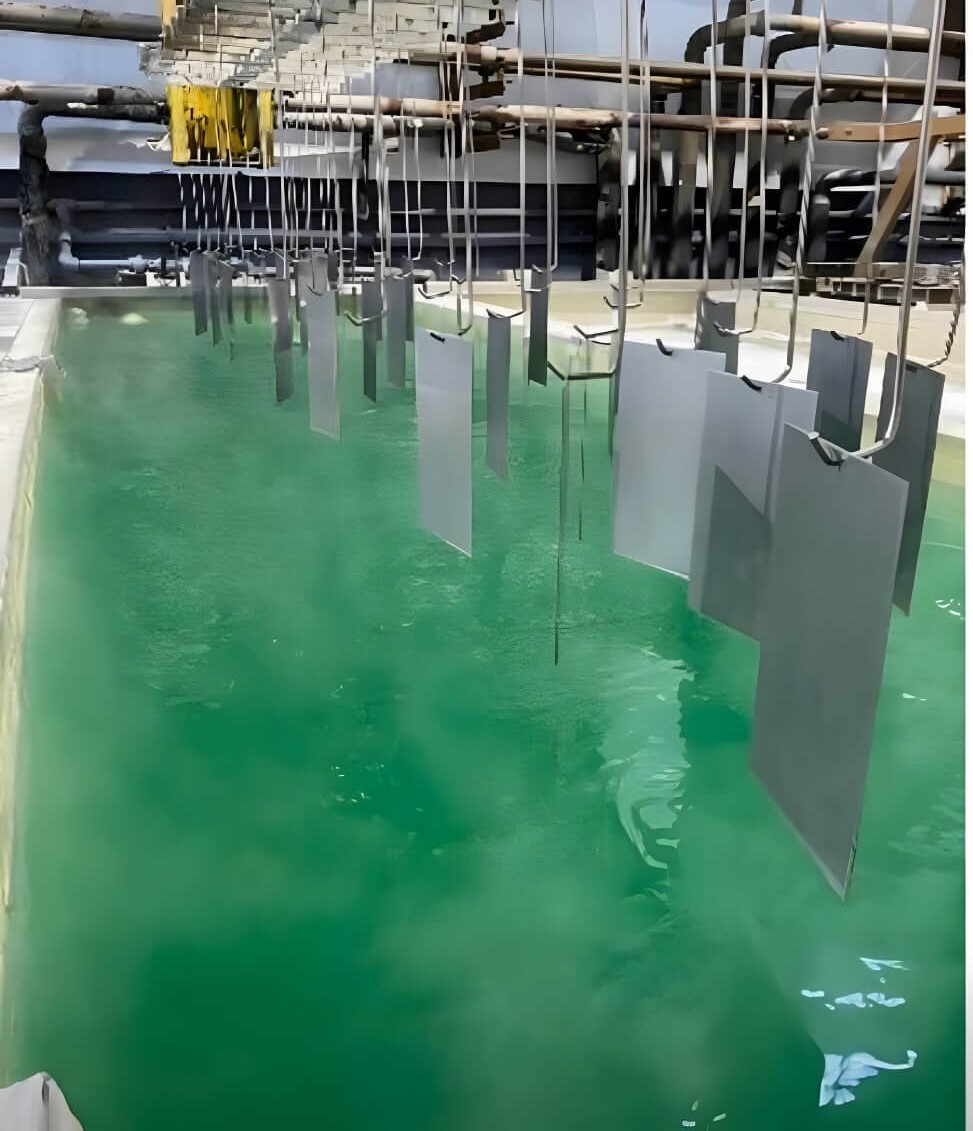
4. Phosphating
Immersing the components in a phosphate solution containing Zn²⁺, Ni²⁺, and Mn²⁺ to form the protective layer.
5. Final Rinsing
Removing residual chemicals from the metal surface.
6. Post-Treatment
To improve performance, the components may be treated with protective coatings such as nanocoatings, specialized oils, or chromate solutions.
Performance of Zinc Phosphate in Industrial Testing
| Test | Di-Cathionic | Tri-Cathionic |
|---|---|---|
| Paint Adhesion (Cross-Hatch Test) | ⭐️⭐️⭐️ | ⭐️⭐️⭐️⭐️ |
| Corrosion Resistance | 300–500 hours | 500–800 hours |
| Oil Absorption and Lubrication | Good | Excellent |
| Thermal Shock Resistance | Moderate | High |
Conclusion: If excellent paint adhesion and maximum corrosion resistance are required, tri-cathionic zinc phosphate is the better option. However, if a standard and cost-effective coating is desired, di-cathionic zinc phosphate is a suitable choice.
Summary: Why Are Di-Cathionic and Tri-Cathionic Zinc Phosphate Coatings Important?
- Di-Cathionic: A cost-effective solution offering good corrosion resistance.
- Tri-Cathionic: An advanced coating providing superior paint adhesion and maximum protection for metal surfaces.
If you are looking to select the right phosphate coating for your industry, FYP consultants are ready to provide specialized solutions tailored to your specific requirements.


No comment for this post.