

Comparison of Zinc Phosphate with Other Surface Preparation Methods

In this article, we compare zinc phosphating with other alternative or complementary methods of surface preparation.
Alongside zinc phosphating, other methods are also used for the preparation and protection of metal surfaces, each with its own advantages and limitations. In this section, zinc phosphating is compared with some of the most important alternative or complementary methods:
Nanoceramic Conversion Coatings (Nanophosphating)
In recent years, conversion coatings based on zirconium and titanium compounds have been introduced as more environmentally friendly alternatives to conventional phosphating processes. These coatings, sometimes referred to as nanophosphating, are free of heavy metals such as nickel and phosphate and form a very thin layer (a few tens of nanometers) on the metal surface. Their application process is usually carried out at room temperature within just a few minutes and produces virtually no sludge.
Another major advantage is their ability to be applied uniformly to different types of metals (steel, aluminum, and zinc), meeting the requirements of multi-metal production lines. Some studies have shown that zirconium coatings can provide corrosion resistance close to that of zinc phosphate coatings, although achieving fully equivalent adhesion may require auxiliary organic primers. The current drawbacks of these methods are the higher cost of specialized chemicals and the need for very precise control of the solution chemistry. Nevertheless, due to the elimination of the environmental issues associated with phosphates (such as phosphorus-containing wastewater) and the reduction in process steps, nanoceramic coatings are rapidly gaining popularity in the automotive and appliance industries, to the extent that they have completely replaced conventional phosphating in some modern production lines.
Chromate Conversion Coating (Chromating)
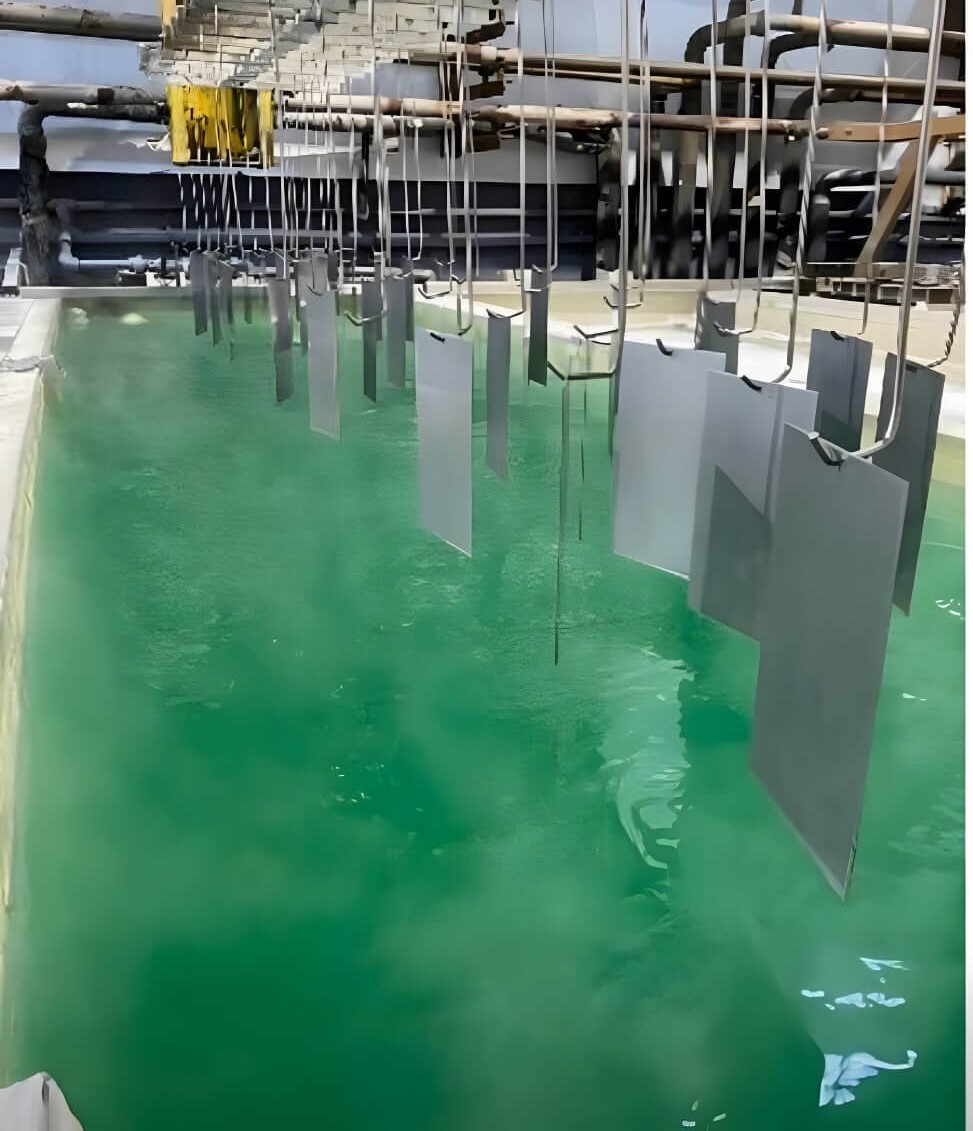
Chromating is an established and effective method for corrosion protection, particularly for aluminum, zinc, and magnesium. In this process, the part is immersed in solutions containing hexavalent chromium compounds (chromates and dichromates), forming a thin metal chromate layer on the surface that is typically yellow to green in color.
Chromating of aluminum (known as Alodine) has been the aerospace industry standard for preparing aluminum prior to painting for many years and provides very high corrosion resistance (in some cases, several hundred hours of salt spray exposure without paint). A comparison of chromating with zinc phosphating shows that chromating on aluminum can provide performance equivalent to or better than zinc phosphating on iron; however, the major drawback of chromates is the toxicity and carcinogenicity of hexavalent chromium.
New environmental regulations (such as the European RoHS and ELV standards) have restricted the use of conventional chromates and encouraged industries to move toward safer alternatives. In response, trivalent chromium (Cr^3+)-based chromates and chromium-free compounds have been developed, but none has yet been able to fully reproduce the performance of hexavalent chromium.
In general, zinc phosphating and chromating cannot be considered direct competitors because each is primarily used on different substrates (phosphating for steel and iron, and chromating for aluminum and zinc).
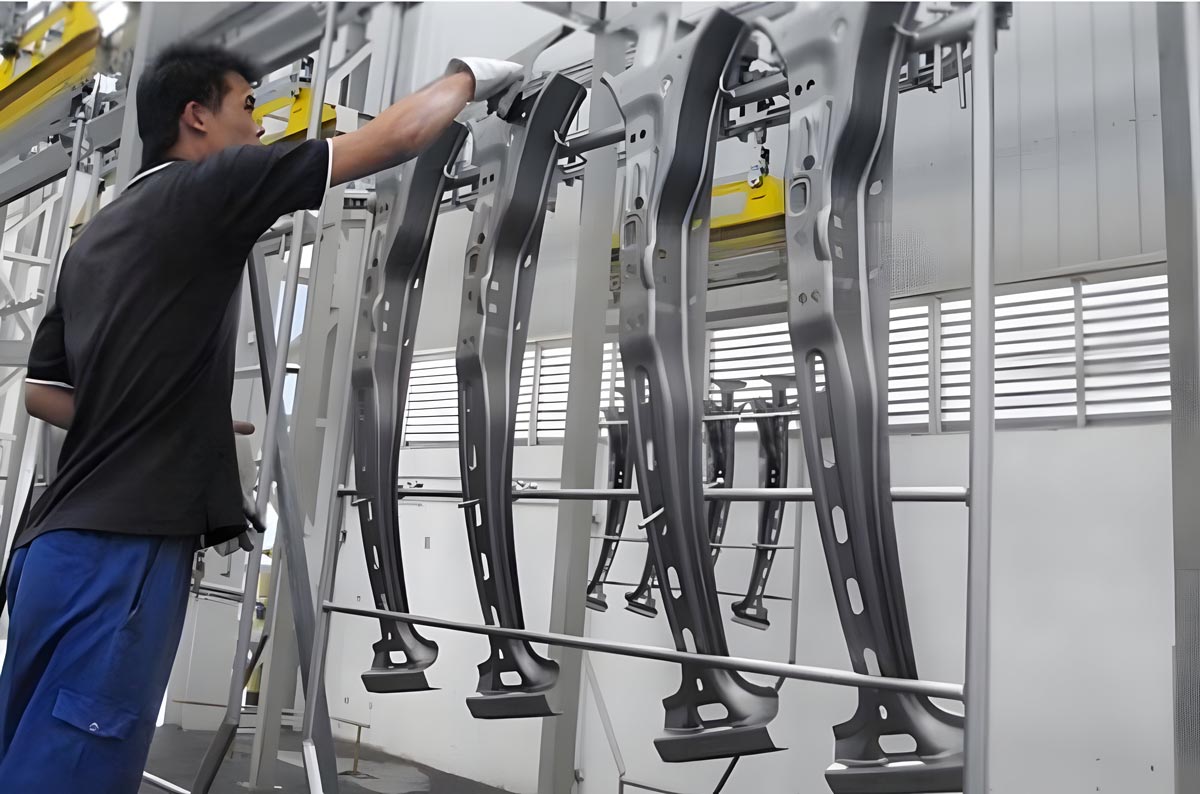
For parts with galvanized zinc coatings, the two processes are sometimes combined; first, the galvanized part is chromated, followed by the application of a phosphate coating and paint. This combination is particularly observed in galvanized automotive components to achieve maximum corrosion resistance.
Anodizing
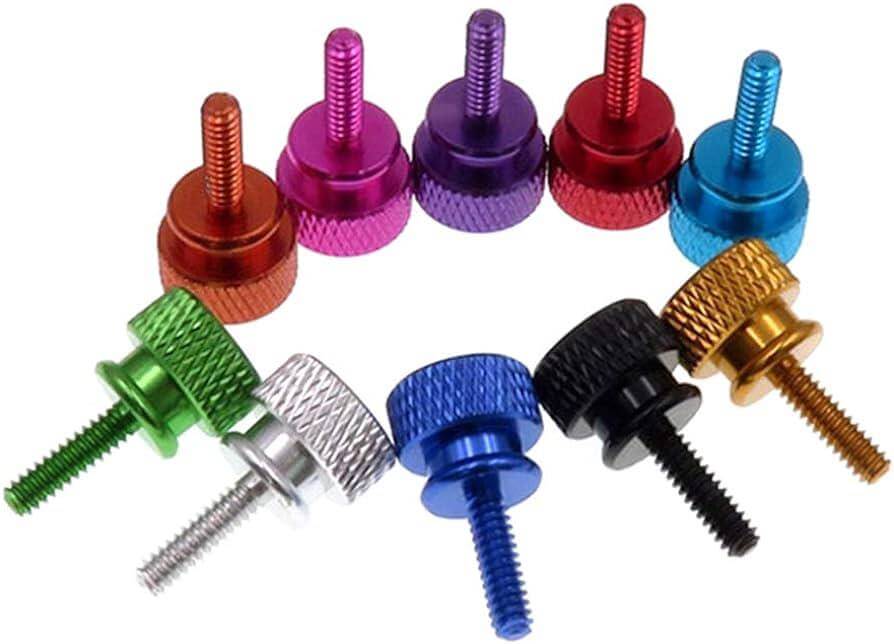
Anodizing is an electrochemical process used to create a hard oxide layer on the surface of a metal, primarily aluminum. In anodizing, the part is used as the anode in an acidic bath (such as sulfuric acid), and an electric current is applied to form a porous but strongly adherent aluminum oxide layer on the surface.
This layer is thicker and more durable than chemical conversion coatings such as phosphating or chromating and provides aluminum with very high corrosion and wear resistance. Anodized aluminum is resistant to atmospheric corrosion even without paint and can provide good paintability (through dyeing the oxide pores). In comparison with phosphating, anodizing has no practical application on steel, as steel undergoes severe corrosion and rusting under anodizing conditions.
However, it is an excellent option for aluminum; in the aerospace industry, many aluminum components are anodized instead of chromated and then coated with a specialized primer to ensure paint adhesion. The advantages of anodizing include avoiding the use of heavy and toxic materials, but its disadvantages include the high cost of equipment (power supplies and acid-resistant tanks), high energy consumption, and the complexity of controlling the electrical process. In addition, the anodized oxide layer is generally electrically insulating, and areas of the coating must be removed to provide electrical conductivity (for example, at bolted connection points).
Overall, anodizing is an excellent method for preparing and protecting aluminum, but it is not suitable for steel; zinc phosphating, on the other hand, is ideal for steel but is not particularly effective on aluminum (aluminum does not phosphatize effectively without specific zinc/copper additives). Therefore, each method is the best choice for its respective application.
Modern Anti-Corrosion Coatings and Methods
Research continues to identify optimized surface preparation methods that are both effective and safer. One of the prominent areas of research is the use of organic/silane-based coatings. In these methods, thin layers of silane molecules or specialized polymers are deposited on the surface, where they can bond to the metal and create a hydrophobic, corrosion-resistant surface.
These coatings are being investigated as next-generation primers for paint, and some promising results have been reported; however, the challenges of achieving strong bonding to different metal surfaces and ensuring long-term durability have not yet been fully resolved. Another approach is the use of primers containing corrosion inhibitors. For example, primer coatings containing zinc phosphate pigments or trivalent chromium inhibitors can partially perform the role of phosphating or chromating and can be applied directly to a clean surface to provide the required protection. This approach eliminates the chemical conversion process and moves directly to the organic coating stage. However, in practice, the adhesion of such coatings is not as strong as when the surface has been previously phosphated. Other emerging technologies include vapor deposition and thermal spraying, in which a corrosion-resistant alloy layer (such as aluminum-zinc or zinc-nickel) is sprayed onto the surface to provide both cathodic and barrier protection. These methods are used primarily for large structures or marine applications and can also simplify subsequent painting operations. Overall, to date, no single method has been able to provide all the advantages of zinc phosphating with the same ease and cost; however, combining new methods with phosphating (such as using a nanoceramic layer after iron phosphating) or gradually replacing phosphating in certain production lines (for example, replacing phosphating in the automotive industry with nano-zirconium) is a trend that is expected to continue over the coming decade. The selection of the best surface preparation method depends on the substrate metal, the required level of corrosion protection, environmental considerations, and the costs acceptable in each industry. Traditional industries continue to rely on zinc phosphating as a proven and reliable solution, while leading industries may adopt a combination of new technologies.
In the next article, we have reviewed Industrial Tests for Evaluating Zinc Phosphate Coatings.
For more information about FYP Zinc Phosphate Products , you can visit the page.
Comparison of Zinc Phosphating with Other Surface Preparation Methods


No comment for this post.