The Role of Fume Suppressants in Acid Baths in Hot-Dip Galvanizing
A Specialized Solution for Controlling Unwanted Reactions and Enhancing Safety
Introduction
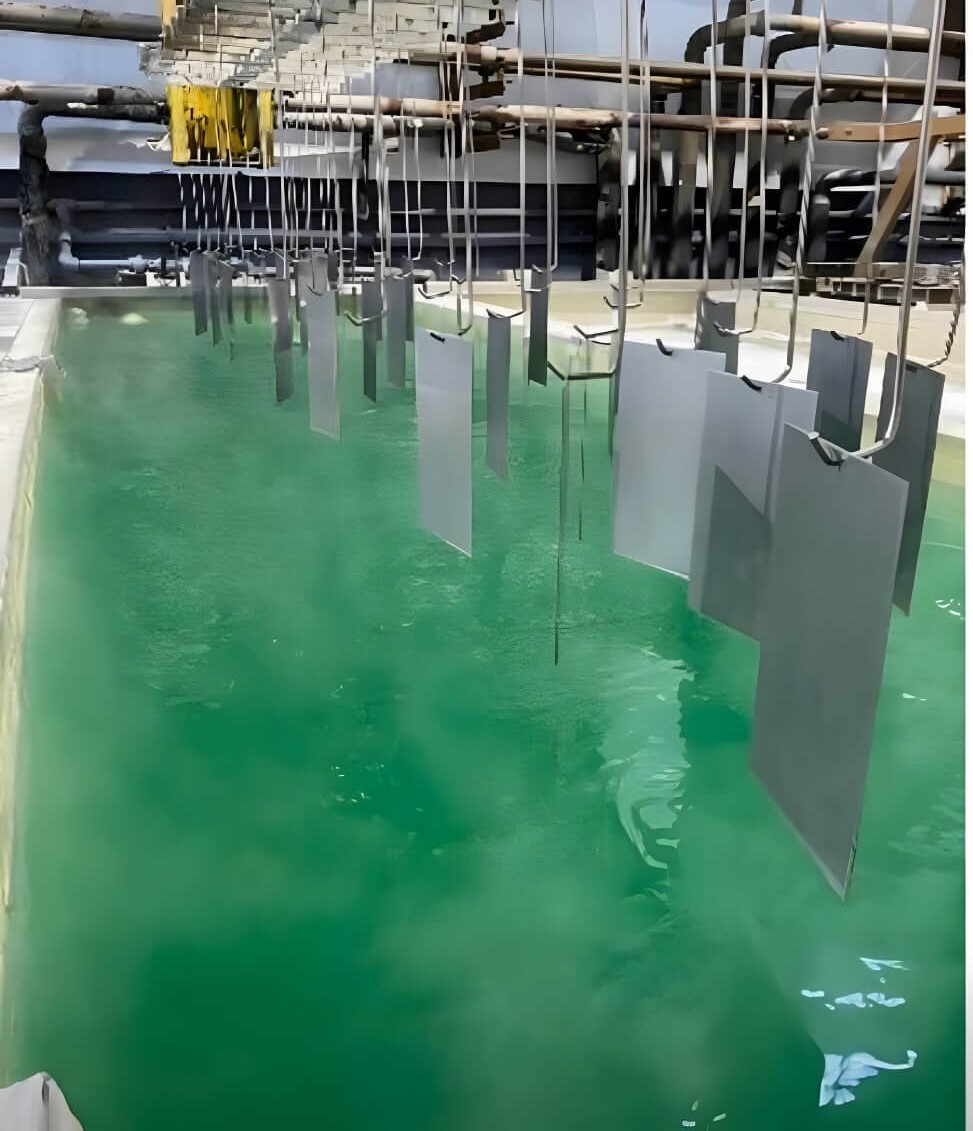
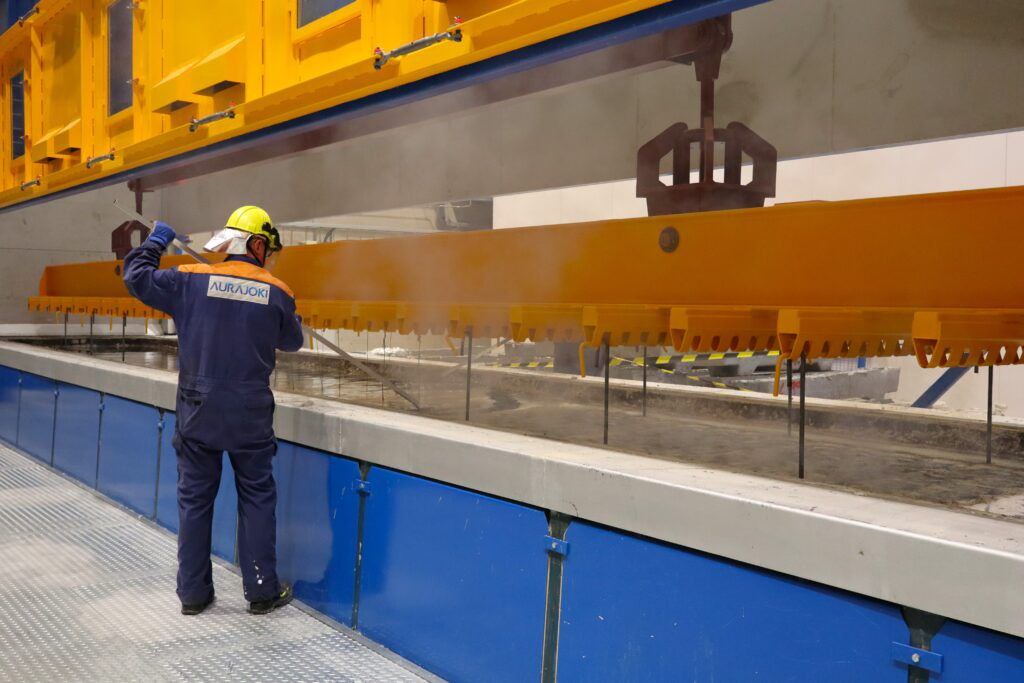
In the hot-dip galvanizing process, pretreatment operations (the role of fume suppressants in acid baths in hot-dip galvanizing) include degreasing, acid pickling, and fluxing. The pickling stage, which is typically carried out using hydrochloric acid (HCl) or sulfuric acid (H₂SO₄), is one of the most critical stages. During this stage, the base metal (usually steel) comes into direct contact with the acid to remove rust and surface oxides. These reactions result in the release of corrosive and hazardous gases such as hydrogen (H₂) and acid vapors. The use of fume suppressants (Acid Inhibitor/De-gasser) in acid baths, as an advanced solution, plays a vital role in controlling these reactions.
Nature of the Pickling Chemical Reaction
In an acid bath, the reaction between steel and HCl occurs as follows:
Fe + 2HCl → FeCl₂ + H₂↑
The release of hydrogen gas and hydrochloric acid vapors creates two main problems:
- Risk of explosion and fire
- Reduced process control and uneven corrosion
What Are Fume Suppressants and How Do They Work?
Fume suppressants used in acid baths generally contain a combination of the following:
- Organic corrosion inhibitors, such as ammonium compounds or benzotriazole
- Inorganic inhibitors, such as thiourea or phosphorus-containing compounds
- Gas bubble growth control agents
These compounds form an adsorbed layer on the metal surface, limiting direct contact with the acid, controlling gas release, and suppressing side reactions.
Technical Reasons for Using Fume Suppressants in Acid Baths
✅ Greater control over the pickling reaction
✅ Reduction in the generation of hazardous gases (H₂) and HCl vapors
✅ Improved operator safety and reduced need for intensive ventilation
✅ Extended acid-bath service life and reduced equipment corrosion
✅ Reduced acid consumption and increased process efficiency
Also Read!
Everything About Hot-Dip Galvanizing Lines
Common Challenges Without Using Fume Suppressants
| Problem | Consequence |
|---|---|
| Rapid gas release | Acid splashing, hazardous vapors, need for strong ventilation |
| Severe corrosion of the metal surface | Reduced zinc coating quality |
| Excessive equipment corrosion | High repair and maintenance costs |
| Changes in bath pH and process instability | Increased errors in process control |
Application Method and Dosage
The dosage depends on the type of acid, temperature, part material, and bath volume:
- For HCl: between 0.3 and 1% by weight
- For H₂SO₄: between 0.5 and 1.5% by weight
Excessive use may slow down the reaction; therefore, precise dosage adjustment is necessary.
Comparison of Fume Suppressant Types (Organic, Inorganic, and Blended)
| Type | Advantages | Disadvantages |
|---|---|---|
| Organic | Biodegradable, environmentally compatible, consistent performance | Higher cost |
| Inorganic | Inexpensive, fast-acting | More toxic, more difficult disposal |
| Blended | Balanced in terms of performance and cost | Requires precise formulation adjustment |
Industrial and Field Results
The use of fume suppressants in acid baths can result in:
- Up to 30% reduction in acid consumption
- Up to 40% reduction in hydrogen gas generation
- Up to 20% improvement in metal surface quality for fluxing and zinc coating
Reliable Scientific and Industrial References
- Zaki Ahmad, Principles of Corrosion Engineering and Corrosion Control, Butterworth-Heinemann, 2006.
- Uhlig’s Corrosion Handbook, 3rd Edition, Wiley, 2011.
- ASTM G31-72 – Standard Practice for Laboratory Immersion Corrosion Testing of Metals
- ISO 8044:2020 – Corrosion of metals and alloys — Basic terms and definitions
- Roberge, P.R. Handbook of Corrosion Engineering, McGraw-Hill, 2000.
Conclusion
The use of fume suppressants in the acid baths of hot-dip galvanizing is not merely an optional measure; rather, it is part of the requirements for safe, economical, and high-quality operation in this industry. Knowledge-based companies active in the field of metal coating can, by introducing and supplying advanced fume suppressants, play an important role in improving safety and quality while also reducing operating costs and environmental impacts.