The Role of Degreasers in Hot-Dip Galvanizing Lines and a Review of Acidic and Alkaline Degreasers
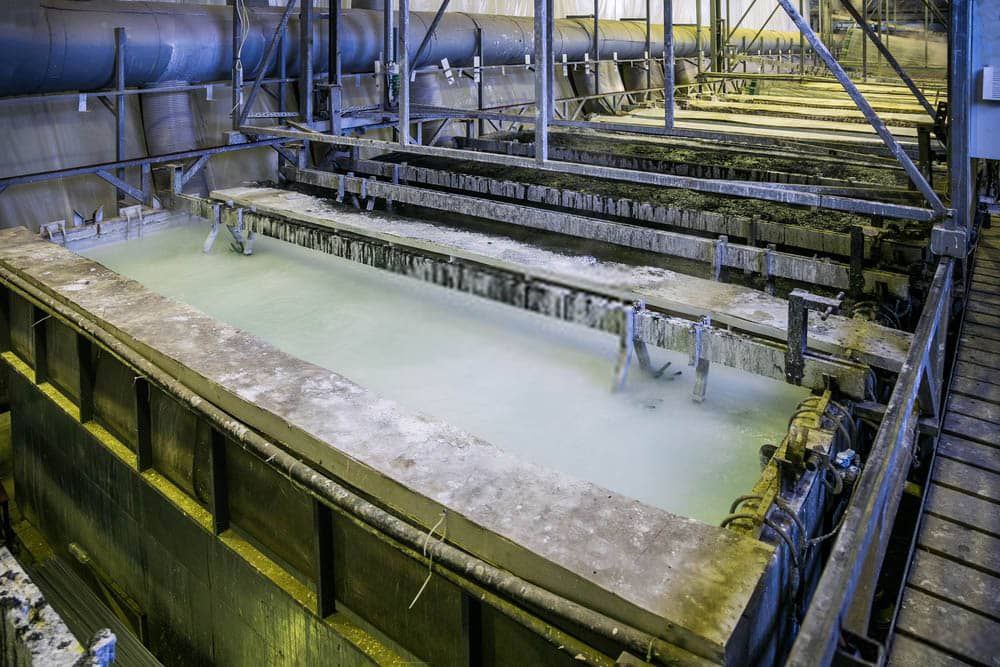
Types of Acidic and Alkaline Degreasers: The Role of Degreasers in Hot-Dip Galvanizing Lines
In the world of hot-dip galvanizing, the first thing that experience and science have taught us is that if the surface is not clean, nothing will proceed properly. Even if the zinc bath is carefully controlled and the temperature, time, and flux conditions are ideal, if the surface of the component still contains a layer of oil, grease, or other contaminants, the reaction between the base metal (iron) and the coating metal (zinc) will not be complete. As a result, the coating may be discontinuous, weak, or even completely absent in certain areas.
The American Galvanizers Association (AGA) and the Galvanizers Association (GA) UK have repeatedly emphasized that degreasing is a critical first step in achieving a uniform coating with high corrosion resistance. According to these sources, many galvanizing defects, including bare spots, peeling, and blistering, can be traced back to incomplete degreasing.
Review of Acidic and Alkaline Degreasers
Degreasers
1. Alkaline Degreasers
In lines dealing with heavy oils, industrial greases, or machined components, alkaline degreasers are the first choice. These formulations typically contain caustic soda (sodium hydroxide), silicates, and nonionic surfactants.
The main reaction involved is saponification, in which fatty esters react with sodium hydroxide to form fatty acid salts (soap) and alcohol:
R–COOR′ + NaOH → R–COO⁻Na⁺ + R′–OH
In effect, grease is converted into water-soluble components and, with the help of surfactants, is removed from the surface in the form of an emulsion.
Advantages:
- Very strong performance at high temperatures (70–90°C)
- Suitable for heavy contaminants and polymeric greases
- Deep cleaning capability for steel surfaces
- Helps reduce the contamination load in the pickling stage
2. Acidic Degreasers
In lines where lightweight components, thin sheets, or relatively clean surfaces are processed, acidic degreasers are commonly used. These formulations often contain diluted phosphoric or hydrochloric acid, along with surfactants and corrosion inhibitors.
The mechanism of action involves the ionization of grease and its emulsification by surfactants. Unlike the alkaline method, the grease is not saponified; instead, it remains as a stable emulsion in the acidic medium:
R–COOR′ + H⁺ → R–COOH + R′–OH → Emulsified + Water-Solubilized
Advantages:
- Operation at lower temperatures (25–40°C)
- Lower energy consumption
- Suitable for delicate components and high-speed lines
- Can be combined with phosphating or light-scale removal
Conclusion:
From a metallurgical, practical, and international industrial standards perspective, the right degreaser is like preparing a canvas for painting. The better the preparation, the greater the strength, uniformity, and durability of the final coating (zinc).
Degreasers in Hot-Dip Galvanizing Lines
Also read:
Industrial Degreasers in Manufacturing Processes
Sources:
- American Galvanizers Association (AGA)
- Galvanizers Association UK (GA)
- TIB Chemicals GmbH – Technical Bulletins
- Herwig GmbH – Pretreatment Guidelines for Hot-Dip Galvanizing
- ASTM A123 / ISO 1461 – Preparation for Hot-Dip Galvanizing